
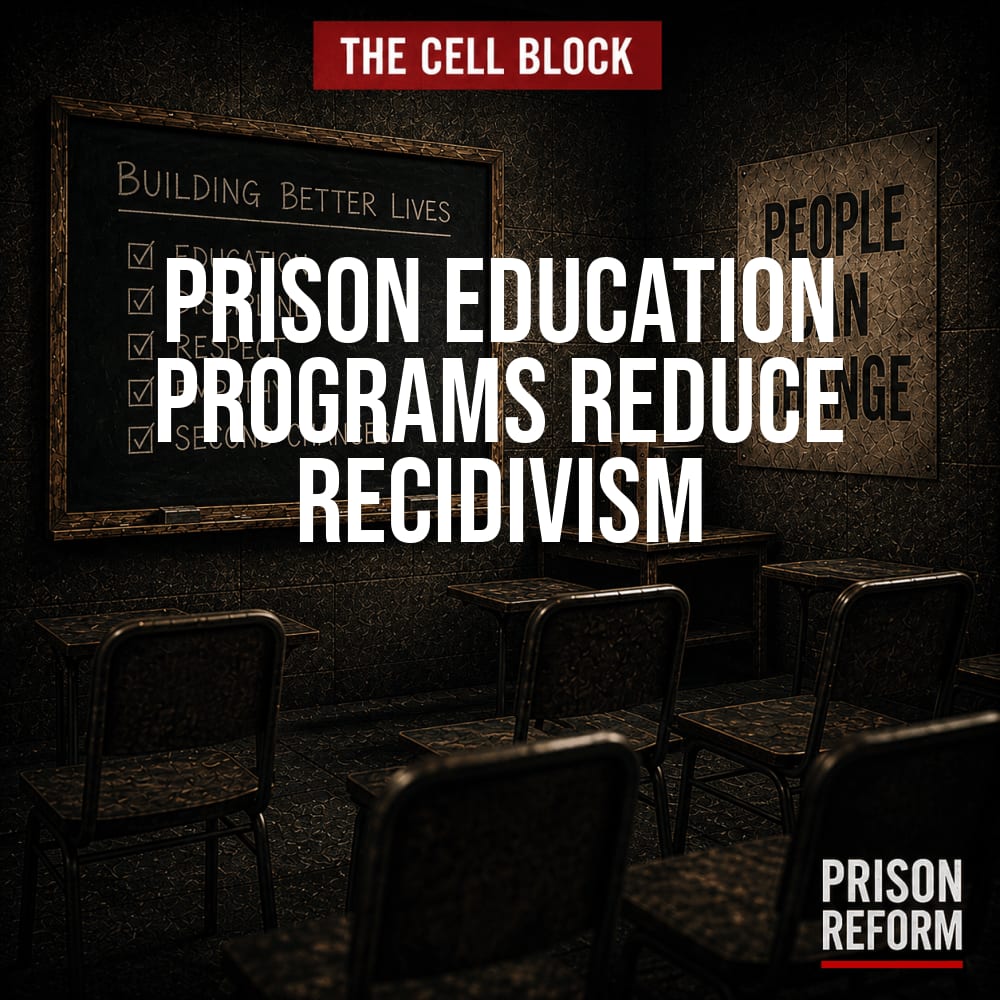
Prison Education Programs Reduce Recidivism
Education in prisons is increasingly recognized as a vital tool in reducing recidivism and aiding rehabilitation. With millions of Americans cycling through the prison system annually, providing educational opportunities to incarcerated individuals has shown promise in breaking the cycle of reoffending. This article examines the impact of prison education programs, supported by research and real-world examples, to understand their role in reforming the justice system.
The Issue
The United States has one of the highest incarceration rates globally, with over 2 million people currently imprisoned. A significant challenge facing the justice system is the high rate of recidivism, with approximately 68% of released prisoners being rearrested within three years. This cycle places a substantial burden on society, both socially and economically. One promising solution to this persistent problem is the implementation of prison education programs, which aim to equip inmates with the skills necessary for successful reentry into society.
Evidence of Effectiveness
Research consistently supports the effectiveness of prison education in reducing recidivism. A study by the RAND Corporation found that inmates who participated in educational programs had a 43% lower chance of recidivating than those who did not. Moreover, every dollar invested in prison education saves approximately four to five dollars in reincarceration costs.
Educational programs offer a range of opportunities, from basic literacy and GED preparation to vocational training and college courses. These programs not only improve employment prospects upon release but also foster personal development and a sense of achievement among participants. Education helps inmates develop critical thinking skills and self-discipline, which are crucial for navigating life outside prison walls.
Real World Example: Bard Prison Initiative
The Bard Prison Initiative (BPI) is an exemplary program demonstrating the transformative power of education in prisons. Operating in six prisons across New York State, BPI offers incarcerated individuals the opportunity to earn a Bard College degree. The program boasts a recidivism rate of just 4%, a stark contrast to the national average.
One notable success story is that of Dyjuan Tatro, a former BPI student who earned his degree while incarcerated. Since his release, Tatro has become an advocate for prison reform and education, emphasizing how his college experience prepared him for life outside prison. His story, featured in the PBS documentary “College Behind Bars,” highlights the potential for education to drive personal transformation and societal reintegration.
Analysis
The success of programs like the Bard Prison Initiative underscores the importance of expanding educational opportunities in prisons. However, challenges remain. Funding is a significant barrier, as many educational programs rely on limited state budgets or private donations. Additionally, access to technology and resources can be restricted, hindering the delivery of comprehensive educational experiences.
Despite these obstacles, the evidence suggests that investing in prison education is a cost-effective strategy for reducing recidivism. By providing inmates with the skills and knowledge necessary to thrive post-release, education programs contribute to safer communities and reduced incarceration costs. Furthermore, education fosters a culture of hope and self-improvement within prisons, encouraging inmates to envision a future beyond their sentences.
Conclusion
Prison education programs offer a proven pathway to reducing recidivism and aiding rehabilitation. As demonstrated by successful initiatives like the Bard Prison Initiative, education can transform lives and break the cycle of reoffending. Expanding access to these programs requires commitment from policymakers, correctional institutions, and society at large. By prioritizing educational opportunities for incarcerated individuals, we can build a more equitable and effective justice system, ultimately benefiting all members of society.
