
TIMELINE:
Crime Date(s): April 3, 1997
Sentencing Date: 1998
Current Status: Convicted inmates serving life sentences
FACILITY:
Name: United States Penitentiary, Lompoc
State: California
Security Level: Medium
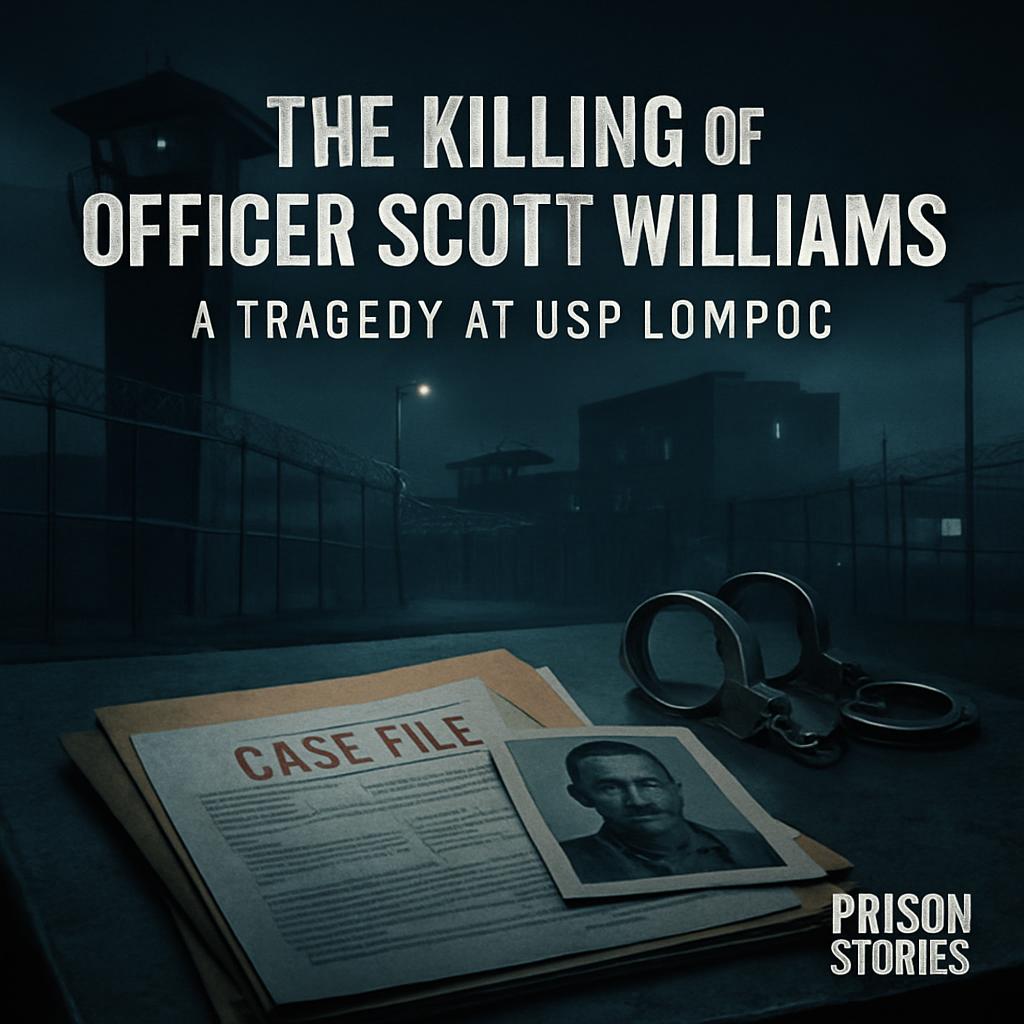
In the quiet, rolling hills of California, nestled within a landscape that belies its grim purpose, stands the United States Penitentiary in Lompoc. On April 3, 1997, this facility became the backdrop for a brutal crime that would forever scar its history and leave an indelible mark on the federal prison system. The murder of Correctional Officer Scott Williams was not just a tragic loss of life; it was a stark reminder of the volatile environment within prison walls and the dangers faced by those charged with maintaining order.
Officer Scott Williams was known among his peers as a dedicated and compassionate officer. At the age of 29, he had been working at USP Lompoc for four years, earning a reputation for his calm demeanor and ability to defuse tense situations. His commitment to his job and his colleagues was unwavering, making the events of that fateful day all the more devastating.
The circumstances surrounding Williams’s death were as shocking as they were tragic. On the morning of April 3, 1997, Williams was performing routine duties in one of the facility’s housing units. It was during this time that he was attacked by two inmates, both of whom were members of a notorious prison gang. The assault was sudden and vicious, leaving Williams with fatal injuries despite desperate attempts by fellow officers to save him.
The investigation into Williams’s murder revealed a chilling premeditation. The inmates involved, later identified as Jose Rivera and David Gonzalez, had conspired to attack Williams as part of a gang initiation ritual. This revelation sent shockwaves through the prison community, highlighting the insidious influence of gangs within the correctional system and the lengths to which members would go to prove their loyalty.
The trial that followed was closely watched, not only by those directly affected but by the nation at large. The prosecution presented a compelling case, detailing the calculated nature of the attack and the ruthless intent behind it. Witnesses, including fellow inmates and correctional staff, provided harrowing testimonies that painted a vivid picture of the events leading to Williams’s death.
Rivera and Gonzalez were ultimately convicted of first-degree murder and sentenced to life in prison without the possibility of parole. The verdict brought a measure of justice to Williams’s family and colleagues, yet it also underscored the persistent challenges faced by correctional institutions in managing gang activity and ensuring the safety of their staff.
In the years since the murder, USP Lompoc has implemented a series of measures aimed at preventing similar tragedies. Enhanced security protocols, increased staff training, and efforts to disrupt gang activities have become integral to the prison’s operations. However, the memory of Officer Williams remains a poignant reminder of the inherent risks of working within the prison system.
The murder of Officer Scott Williams also sparked broader discussions about the conditions and safety measures in federal prisons across the United States. Advocacy groups and policymakers have since called for increased resources and support for correctional officers, emphasizing the need for comprehensive strategies to address the root causes of violence within prisons.
The legacy of Scott Williams extends beyond the walls of USP Lompoc. His tragic death serves as a call to action, urging continued vigilance and reform in a system where lives are perpetually at risk. As we reflect on the events of April 3, 1997, we are reminded of the courage and sacrifice of those who serve on the front lines, ensuring the delicate balance of order and humanity in one of society’s most challenging environments.
In the pursuit of justice and reform, it is crucial to remember the individuals behind the headlines, like Scott Williams, whose lives and sacrifices shape the ongoing narrative of America’s prison system.
The murder of Officer Scott Williams at USP Lompoc catalyzed an extensive investigation, scrutinizing not only the immediate circumstances but also the broader systemic issues that allowed such a tragedy to occur. The Federal Bureau of Prisons, alongside the FBI, launched a comprehensive inquiry aimed at understanding the dynamics within the facility and preventing future incidents.
The Investigation Process
In the days following the murder, investigators faced the daunting task of piecing together the events leading up to Williams’s death. Surveillance footage, witness testimonies, and forensic evidence played crucial roles in reconstructing the timeline. The prison’s video surveillance captured the assault, providing indisputable evidence of the brutal attack. However, it was the testimonies of fellow inmates and officers that offered a deeper insight into the motivations behind the crime.
Interviews with inmates revealed the pervasive influence of gang culture within the prison. Rivera and Gonzalez, the perpetrators, were identified as members of a powerful gang that exerted significant control over certain sections of the facility. Their attack on Officer Williams was reportedly part of a calculated move to assert dominance and send a message to rival factions.
Gang Influence and Prison Dynamics
The investigation highlighted the complex web of alliances and rivalries that dictated daily life within USP Lompoc. Gangs, often formed along racial and ethnic lines, wielded considerable power, influencing everything from contraband smuggling to acts of violence. This underground network posed a continuous challenge to prison authorities, who struggled to maintain order in the face of such entrenched structures.
One of the key revelations was the level of sophistication with which gangs operated. Communication channels, often covert and sophisticated, allowed gang leaders to orchestrate activities both inside and outside the prison. The murder of Officer Williams, therefore, was not an isolated incident but part of a larger pattern of orchestrated violence aimed at consolidating power.
Repercussions and Institutional Changes
In response to the findings, USP Lompoc and other federal facilities implemented a series of reforms aimed at curbing gang influence and enhancing security measures. One significant change was the introduction of advanced surveillance technologies, including enhanced video monitoring systems capable of real-time analysis and alert systems for suspicious activities.
Additionally, the prison increased its focus on intelligence gathering. A dedicated unit was established to monitor gang activities, analyze patterns, and intercept communications. This proactive approach aimed to disrupt gang operations before they could escalate into violence.
Staff training also became a priority. Correctional officers received specialized training in conflict de-escalation, gang identification, and crisis response. These programs were designed to equip officers with the skills necessary to navigate the volatile environment and protect themselves and their colleagues.
Wider Implications and Policy Discussions
The murder of Officer Williams reverberated beyond USP Lompoc, prompting a national conversation about the safety and well-being of correctional officers. Advocacy groups, such as the National Association of Police Organizations, called for increased funding and resources to support prison staff. Their arguments emphasized the need for better training, mental health support, and improved working conditions.
Policymakers responded by proposing legislation aimed at bolstering prison security and addressing the root causes of violence. This included measures to enhance officer safety, such as the provision of personal protective equipment and the establishment of rapid response teams for critical incidents.
Discussions also centered around prison reform, with experts advocating for strategies to reduce overcrowding and improve rehabilitation programs. By addressing these systemic issues, they argued, the cycle of violence and gang influence could be mitigated, creating a safer environment for both inmates and staff.
The Human Element
Amid the institutional changes and policy debates, the personal impact of Williams’s murder remained profound. His colleagues, family, and friends grappled with the loss, finding solace in the legacy of his dedication and service. Memorials and tributes served as reminders of his sacrifice, while also highlighting the ongoing risks faced by those working within the prison system.
Officer Williams’s death underscored the importance of community and support among correctional staff. In the aftermath, many officers at USP Lompoc expressed a renewed sense of solidarity and commitment to their roles. Support networks were established, providing emotional and professional assistance to those affected by the tragedy.
Looking Forward
As the years passed, the lessons learned from the investigation into Officer Williams’s murder continued to influence prison policies and practices. The changes implemented at USP Lompoc served as a model for other facilities, demonstrating the importance of proactive measures in ensuring safety and security.
The broader impact of Williams’s death also fueled ongoing advocacy for prison reform. By addressing the underlying issues of gang influence and systemic violence, stakeholders hoped to create a more humane and effective correctional system.
In remembering Officer Scott Williams, we are reminded of the inherent challenges and responsibilities of those who work within the prison system. His story, marked by courage and sacrifice, continues to inspire efforts toward justice and reform, ensuring that his legacy endures in the pursuit of a safer, more equitable society.
The murder of Officer Scott Williams at USP Lompoc was not only a personal tragedy but a pivotal moment for the U.S. federal prison system. The aftermath of his death catalyzed critical discussions about safety, reform, and the systemic issues plaguing correctional facilities nationwide. As the dust settled, the implications of this tragedy became a touchstone for change, prompting a reevaluation of policies and practices within the prison system.
Lessons Learned
One of the most significant lessons from Officer Williams’s death was the urgent need for comprehensive gang management strategies within prisons. The investigation revealed the sophisticated operation of gangs, highlighting the necessity for targeted interventions. In response, the Federal Bureau of Prisons intensified efforts to dismantle gang networks, employing intelligence-driven approaches and increasing collaboration with local and national law enforcement agencies.
The tragedy also underscored the importance of proactive safety measures for correctional staff. The introduction of advanced surveillance systems and enhanced officer training programs aimed to create a safer environment. These initiatives focused on equipping officers with the tools and knowledge necessary to navigate the challenges posed by gang influence and violence.
Systemic Changes and Policy Shifts
In the wake of Officer Williams’s murder, federal prisons implemented a series of reforms to address the systemic issues that contributed to the tragedy. These changes extended beyond Lompoc, influencing policies across the nation. Enhanced security protocols, improved staff-to-inmate ratios, and increased funding for mental health and rehabilitation programs were among the reforms aimed at reducing violence and improving conditions within prisons.
Policymakers recognized the need for a holistic approach to prison reform, addressing not only the symptoms of violence but its root causes. This recognition led to legislative proposals focused on reducing overcrowding and improving rehabilitation efforts. By investing in these areas, the goal was to create an environment conducive to positive inmate outcomes and reduced recidivism.
Impact on Correctional Staff and Families
For those who knew Officer Williams, his death was a stark reminder of the inherent dangers faced by correctional staff. The tragedy fostered a renewed sense of camaraderie and solidarity among officers, leading to the establishment of peer support networks. These networks provided essential emotional and psychological support, helping staff cope with the trauma and stress associated with their roles.
The Williams family, while devastated by their loss, became advocates for change, pushing for reforms that would protect other families from experiencing similar tragedies. Their voices added a personal dimension to the broader discussions on prison safety and reform, humanizing the policy debates and emphasizing the real-life impact of these systemic issues.
Broader Societal Implications
The ripple effects of Officer Williams’s murder extended beyond the confines of the prison system, influencing public perception and policy debates about criminal justice and correctional reform. Advocacy groups leveraged the tragedy to push for broader systemic changes, arguing for a justice system that prioritizes rehabilitation over punishment.
This advocacy contributed to a growing movement towards restorative justice practices, emphasizing accountability and healing rather than retribution. By shifting the focus from punitive measures to rehabilitation and reintegration, stakeholders hoped to foster a more just and equitable system.
The Ongoing Quest for Reform
As time progresses, the legacy of Officer Williams continues to inform and inspire efforts toward meaningful prison reform. His story remains a powerful reminder of the courage and sacrifice of those who work within the correctional system, and the ongoing need for vigilance and improvement.
The changes implemented in the wake of his death have set a precedent for addressing the complex challenges faced by the U.S. prison system. While progress has been made, the journey towards a safer, more humane correctional environment is ongoing, requiring continued commitment from policymakers, advocates, and correctional staff alike.
In honoring Officer Williams, we reaffirm our dedication to reforming a system that serves not only to punish but to rehabilitate and protect. His legacy endures in the efforts to create a safer and more just society, where tragedies like his become a thing of the past.
